
How one skeptical IT Director reinforced my philosophy on technology partnerships, trust, and delivering long-term value.
In 2011, I was onboarding a Fortune 200 company when a Director of IT asked me a question I'll never forget.
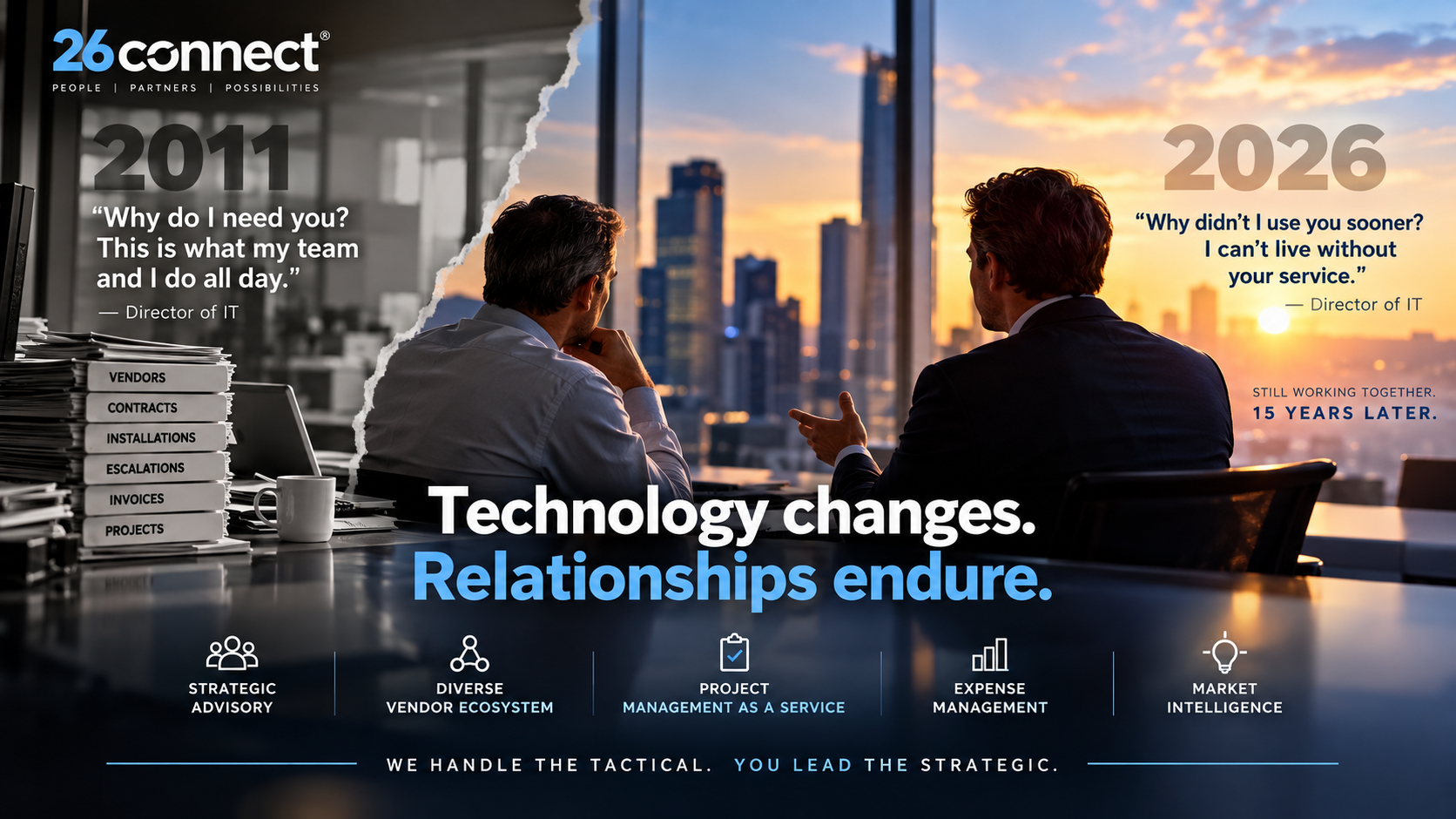
“Why do I need you? This is what my team and I do all day.”
It was a fair question. And quite frankly, one I welcomed.
I had been introduced to the organization through its Vice President of Network Operations. As I worked through the initial discovery meetings, learning about their technology environment and explaining how we could support their operations, I encountered a healthy dose of skepticism.
This Director had an experienced IT team. They were already managing their network, working with technology vendors, handling escalations, and overseeing projects.
So what exactly was I going to bring to the table that his team couldn't do themselves?
The answer wasn't about what his team could do. It was about what they should be spending their time doing.
Here's what I explained.
I had no doubt his team was capable of performing the work.
But I also understood how much time those responsibilities consumed.
How many hours were spent comparing vendor proposals, negotiating contracts, coordinating installations, escalating trouble tickets, reviewing invoices, and following up on project timelines?
And more importantly, how much of that time could be better spent working toward the strategic objectives the business had established?
IT leaders aren't hired simply to keep the lights on. They're expected to drive innovation, improve operational efficiency, reduce risk, and align technology investments with business objectives.
Yet too often, their most valuable resources are buried in tactical responsibilities.
Just because your team can do something doesn't necessarily mean it's the best use of their time.
I wasn't offering to replace his team.
I was offering to extend it.
One of the things I've always believed is that a good technology advisor should bring more to the relationship than a catalog of products and services.
We should know the market.
We should understand what technology costs, which providers perform, what solutions are emerging, and how those solutions align with where a business wants to go.
And perhaps most importantly, we should be willing to roll up our sleeves and do the work.
That means managing vendors, coordinating projects, resolving issues, reviewing expenses, and helping organizations navigate the complexities of an ever-changing technology landscape.
It means taking responsibility for the tactical details that can overwhelm an internal IT department.
Today, at 26connect, that philosophy is reflected in our technology advisory services, broad ecosystem of providers, Project Management as a Service, and expense management capabilities.
We become an extension of the customer's IT organization, providing additional expertise and resources without requiring them to add another full-time employee.
And because our advisory services are generally compensated through our technology provider relationships, customers can often leverage these resources without an additional advisory fee.
Think of it as adding another experienced member to your team, without adding another headcount to your payroll.
Technology doesn't stand still.
Neither do pricing, vendor capabilities, service delivery models, or business requirements.
One of the most important things we bring to our customers is an ongoing understanding of the technology marketplace.
We're constantly educating ourselves on emerging products, evolving services, provider performance, and competitive pricing.
We understand what services should cost, which providers are best positioned to deliver, and how today's technology decisions can support tomorrow's business objectives.
That knowledge matters.
Because there's a significant difference between simply renewing a contract and understanding whether that contract still makes sense for the business.
There's a difference between selecting a familiar vendor and identifying the provider best equipped to support an organization's future.
And there's a difference between managing technology and strategically leveraging it.
Our responsibility is to help our customers see the bigger picture while we manage the details that get them there.
Now, back to that Director of IT.
He was skeptical during our first conversation.
I respected that.
I wasn't expecting him to take my word for it. I knew we needed to demonstrate our value.
And that's exactly what we set out to do.
We became a resource for his team, helping manage the tactical responsibilities, navigate vendor relationships, and take work off their plates.
About three months later, that same Director approached me and said something I'll never forget.
“Why didn't I use you sooner? I can't live without your service.”
That meant more to me than closing a deal.
It meant we had earned his trust.
We hadn't replaced his team. We hadn't taken over his strategy. And we certainly hadn't suggested that we knew his business better than he did.
We had simply made his life easier and helped his team become more effective.
That's when you know you've moved beyond being another vendor.
You've become a trusted partner.
Here's the part of this story I'm most proud of.
That conversation happened in 2011. It's now 2026, and I'm still working with that same customer.
Fifteen years.
Think about how much has changed in technology during that time.
Cloud computing has transformed infrastructure. Cybersecurity has become a boardroom priority. Connectivity requirements have exploded. Artificial intelligence is reshaping how organizations operate.
We've seen new providers enter the market, others disappear, pricing models evolve, and entire technology categories emerge.
But through all of those changes, one thing has remained constant.
The relationship.
Not because of a single transaction.
Not because of one contract.
And not because we sold them a particular product or service.
Because we've continued to bring value to the table.
I've always believed that the best customer relationships aren't built around transactions. They're built around trust, accountability, and the confidence that someone has your back when you need them.
That kind of relationship isn't established in a sales presentation.
It's earned over time.
And it's reinforced every time you answer the phone, solve a problem, provide sound advice, or help a customer accomplish something that matters to their business.
Fifteen years later, the fundamental challenge facing IT leaders remains remarkably familiar.
There's more technology to manage, more vendors to evaluate, more risk to mitigate, and never enough time to do it all.
That's where I believe a true technology partner makes the difference.
Not by replacing the expertise inside an organization, but by complementing it.
Not by adding another layer of complexity, but by removing it.
And not by selling a product and disappearing, but by becoming a resource the organization can depend on.
At 26connect, our mission is simple:
We take on the tactical so our customers can focus on the strategic.
Whether that's sourcing connectivity, evaluating network and cloud solutions, navigating cybersecurity requirements, managing complex implementations, or optimizing technology expenses, our goal is to make our customers' lives easier and their organizations more effective.
Looking back, that Director of IT taught me something important in 2011.
You don't earn a seat at the table by telling people how valuable you are. You earn it by proving it, over and over again.
That lesson has stayed with me throughout my career and continues to shape how I approach every customer relationship at 26connect.
I don't measure success simply by the number of contracts we sign or the services we deliver.
I measure it by the problems we solve, the time we give back, the money we help save, and the relationships we build along the way.
And if we're fortunate enough to still be working together 15 years later?
Well, I think that says more than any sales pitch ever could.
Technology changes. Relationships endure.
If your organization is spending more time managing vendors, coordinating projects, and navigating technology expenses than advancing strategic initiatives, I'd welcome the opportunity to have a conversation.
At 26connect, we're not looking to replace your IT team. We're here to help make them more effective.
We handle the tactical. You lead the strategic.
Visit 26connect.com to learn how we can become an extension of your team.